
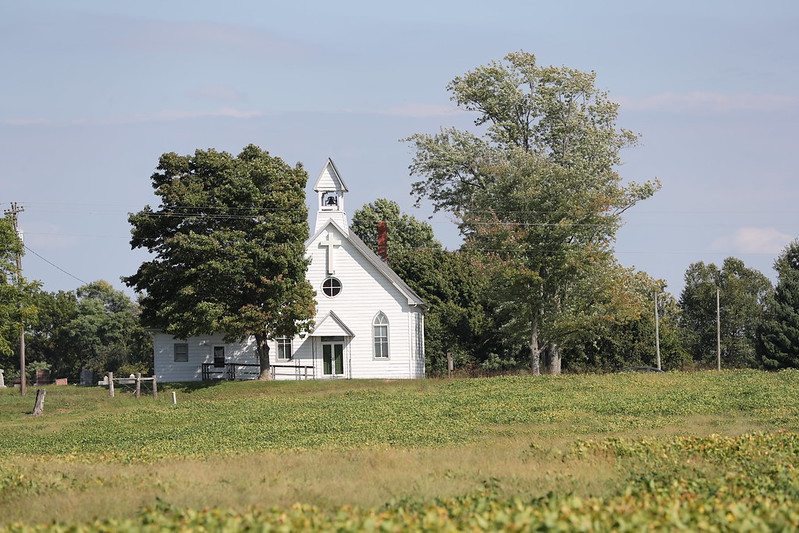
During July, many of us have been praying for the revitalization of rural Kentucky Baptist churches. But what is church revitalization, and what are some keys to experiencing it?
Church revitalization could be defined as a local church functioning in the way it was intended by its Creator. Acts 2:42-47 is often used as a picture of a healthy church. The believers in this early congregation were gathering frequently, spending time in God’s word and fellowship, they prayed and worshiped together; and the early church grew numerically as God was adding to its number those who were being saved.
Many churches today, perhaps even the majority, would not be described as healthy. They are seeing a decline in attendance and giving. They are having fewer families engaged in the life of their congregation and, for many, it has been a while since anyone was saved and baptized through their ministry.
What are some things that pastors, elders and ministry leaders can do to help their church function the way God intended? Here are three considerations.
1. Address emerging problems with God honoring solutions: In Acts 6, the church in Jerusalem was increasing in disciples, but an issue arose with the daily distribution of food for the widows (Acts 6:1). That problem, which threatened the unity of the congregation and stifled the growth of the church, was addressed, and the number of disciples began to increase again (Acts 6:2-7).
Pastors, elders and ministry leaders who hope to lead their church toward revitalization must address emerging problems. Whether the problem is a lack of parking space, the need for a building remodel, addressing leadership deficiencies, or even the removal of a staff member or church bully, problems must be addressed if a church is to move forward in health and growth.
To address emerging issues, pastors must identify the problems, gather the church’s appointed leaders to help understand them, prayerfully develop God-honoring solutions and then implement those solutions.
2. Return the church to its biblical mission: Pastors, elders and ministry leaders soon discover that solving problems alone is not enough to bring about renewal and revitalization. Addressing church gossip, remodeling the church building or updating the constitution and bylaws will not result in renewal. Unless the church returns to its original purpose — that is full engagement in the Great Commission — it is highly unlikely that any real revitalization will occur.
Dr. Tim Beougher, longtime evangelism professor at The Southern Baptist Theological Seminary, has reminded aspiring ministry leaders for decades that “a church will drift into fellowship but must be led into evangelism.” As a church begins to reach new people in its community through intentional outreach efforts, those churches typically see greater enthusiasm, new families getting engaged, more guests in their services and increased giving for the needs of the church.
The church has one mission, the Great Commission, and one key to local church revitalization is for a pastor to determine by the grace of God to lead the church in faithful and effective evangelistic outreach.
What that evangelism strategy looks like will be different for each congregation. I saw on social media recently a response to one pastor’s post about God’s calling on his life. This reply stated to the pastor, “You are a blessing!! Most of all don’t stop knocking on those doors!! That one knock put a lot of souls in the seat that truly needed and been longing for!!” That quote was a reference to a lady who was reached by the church through intentional outreach and today has filled two pews of attenders in the church through her witness. Every local church pastor must prayerfully discover how he will most effectively lead the congregation to bring the gospel to its community. God will help you as you seek Him for a plan.
3. Care well for the people in the church: People matter to God, and they must matter to us. People are not the means to an end they are the objects of God’s love and grace and deserve the highest attention of the leaders who are called to serve them. Jesus, the Good Shepherd, loved and cared for His disciples. He trained them and sent them out on ministry assignments, but He also took them away for times of rest and refreshing. Pastors who will lead churches in renewal and revitalization must learn from Christ how to make sure the flock they are called to oversee is being cared for effectively.
If you are a pastor, elder or ministry leader, please be encouraged in God’s calling on your life and know that God can use you to help a local church as you live out your calling in humble dependence on Him. There is nothing easy about church revitalization, and there are no cookie cutter or silver bullet approaches that will promise the desired results. But we serve a risen Savior who has the power to make dead things live. May God be pleased to use you to help a local church experience its best days of ministry and gospel impact.
If your church is experiencing great health and growth then please join us in praying that every church will be a thriving church and that every leader will be a cared for leader. Imagine what would happen if every congregation was experiencing its best days of ministry right now.

